Fall Aeration & Overseeding: The Best Thing You Can Do for Your NoVA Lawn
If there's one lawn-care task that delivers the biggest payoff in Northern Virginia, it's fall aeration and overseeding. Here's why.
Why Northern Virginia lawns need aeration
Our soil is heavy clay—great for holding nutrients, terrible for drainage and root growth. Over a season of mowing, walking, and summer heat, that clay compacts down hard. Compacted soil chokes the roots: water runs off instead of soaking in, air can't reach the root zone, and grass thins out.
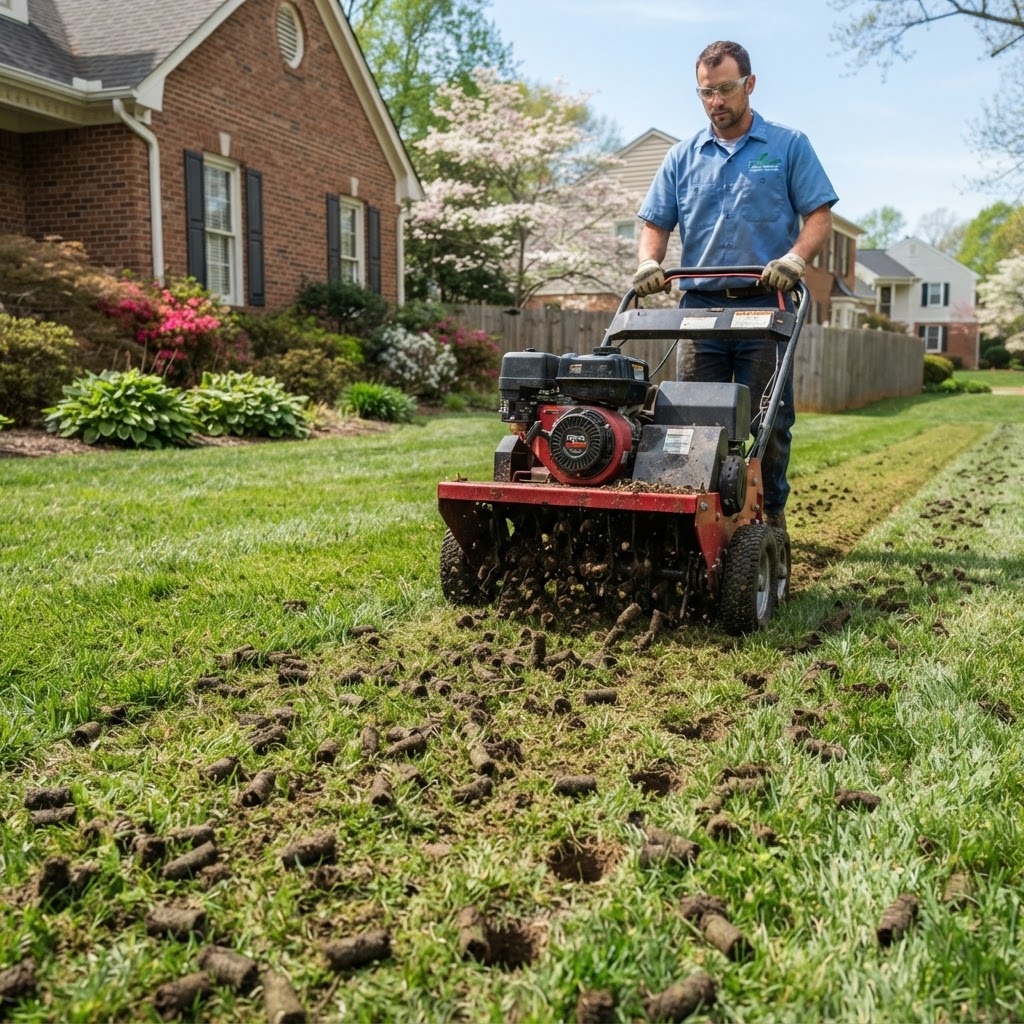
Core aeration pulls small plugs of soil from the lawn, opening channels for air, water, and nutrients to reach the roots. It relieves compaction and encourages deeper, stronger roots.
Why overseed at the same time?
Aeration creates thousands of holes in your lawn. When you spread grass seed right after aerating, those holes catch and hold the seed, giving it direct soil contact—the single biggest factor in germination. You get far better seed-to-soil contact than broadcasting over compacted ground.
Why fall?
Early fall (September–October) is the sweet spot in Northern Virginia:
- Soil is still warm from summer, so seed germinates fast
- Air is cooling down, so new grass isn't stressed by heat
- Weed pressure drops—crabgrass and other summer weeds are dying back
- New grass has months to establish before next summer's heat
Spring overseeding works, but you're fighting weed seeds that germinate at the same time. Fall gives your new grass a clean runway.
What we do
We core-aerate your entire lawn, broadcast premium tall fescue seed, and can top-dress with compost to give the new seed a boost. We'll also advise on watering—keep the soil consistently moist (light watering twice a day) until the new grass is established, usually 3–4 weeks.
Want a thicker lawn next spring? Book your fall aeration and overseeding now—September slots fill up fast.