Spring Lawn Fertilization Guide for Northern Virginia
Spring is when your lawn wakes up, and the right feeding early in the season sets the tone for the entire year. But timing and product matter—get it wrong and you can do more harm than good.
When to fertilize
Wait until your grass is actively growing—usually late March to early April in Northern Virginia. Fertilizing too early, while the grass is still dormant, wastes product and can feed weeds instead. You'll know it's time when you need to mow for the first time.
What to use
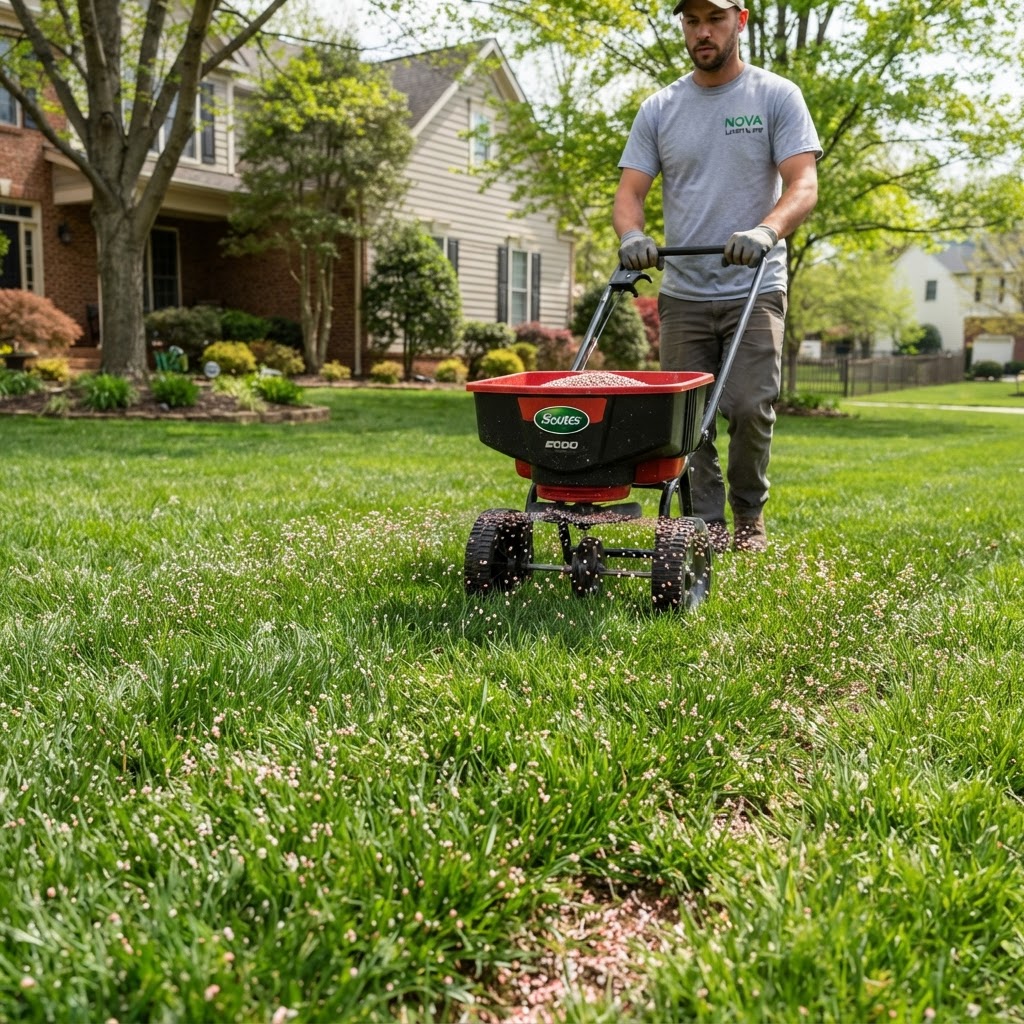
For the spring application, we recommend a slow-release fertilizer with a pre-emergent weed control. The slow-release nitrogen feeds the grass steadily without the surge-and-crash of quick-release products. The pre-emergent stops crabgrass seeds from germinating before soil temperatures hit 55°F.
How much
Less is more in spring. Over-fertilizing pushes too much top growth at the expense of roots, which sets your lawn up for summer stress. A light spring feeding is better than a heavy one—save the heavier feeding for fall.
Don't forget the other spring tasks
Fertilizing works best when the lawn is ready for it:
- Clean up winter debris before feeding
- Mow once or twice to get the lawn at an even height
- Check for bare or thin spots—note them for fall overseeding
- Water after fertilizing if no rain is expected
The full-season plan
One spring feeding isn't enough for a great lawn. A proper Northern Virginia program includes:
- Early spring: Fertilizer + pre-emergent
- Late spring: Light feeding
- Early fall: Aeration, overseeding, and feeding
- Late fall: Winterizing feeding (the most important one)
We build these programs for clients all season long. Want us to handle yours? Request a free estimate.