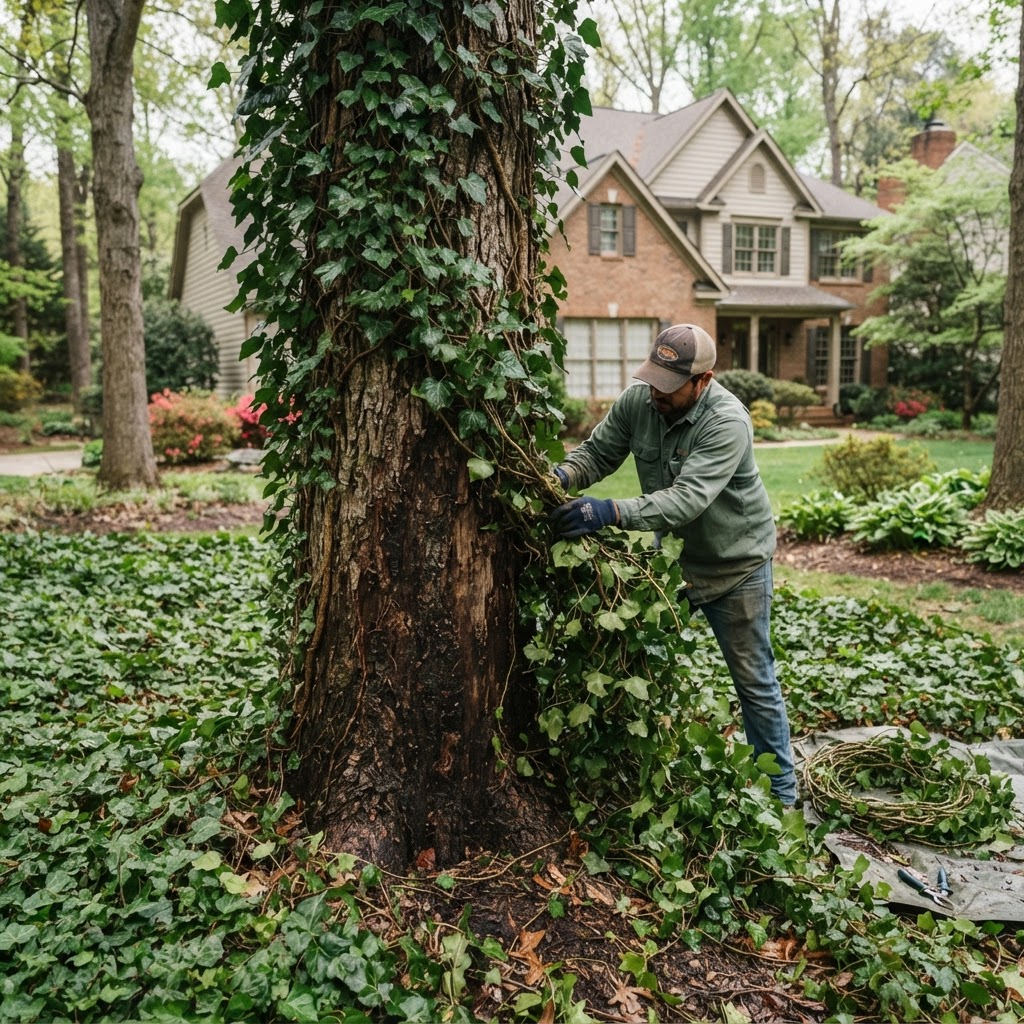
English Ivy Removal from Yards, Trees and Fences
English ivy smothering your trees, beds or fence? We clear what's accessible and protect what you want to keep.
English ivy spreads quickly across ground, climbs trees, and clings to fences and walls. We remove ivy from the ground, from the base of trees, and from accessible fences and structures — defining clearly before work begins what can be removed without damaging the surface. Ivy may return from surviving roots and monitoring may be recommended.
What's Included
- Assessment distinguishing ground, tree-base and structural ivy
- Ground-level ivy clearing
- Tree-base ivy removal to protect bark
- Fence and accessible structural removal where safe
- Debris haul-away
- Limitations on masonry and fragile surfaces stated upfront
Why You Might Need English Ivy Removal
Common situations we see across Northern Virginia yards.
English ivy is spreading across the ground and climbing your trees, and you want it removed before it does more damage.
Ivy has covered your fence or attached to your siding and you're not sure how to remove it without causing damage.
You cleared ivy once but it came back from the roots — you want a real plan this time.
How JYG Approaches English Ivy Removal
English ivy removal is not one task — it is three different situations that require different approaches: removing it from the ground, freeing the base of trees, and removing it from structures like fences or masonry. We evaluate each before work begins, define what can be done without damaging what you want to keep, and give you an honest picture of whether monitoring and follow-up will be needed.
Where English Ivy Becomes a Problem
English ivy is one of the most common invasive plants in Northern Virginia yards. It spreads quickly and turns up in the same predictable spots:
- Tree trunks and root flares
- Wood and chain-link fences
- Brick and foundation beds
- Slopes and wooded property edges
- Beneath shrubs
- Around sheds and outdoor equipment
- Areas where ivy has replaced the original garden bed
Tree-Safety Language
When ivy is growing on a tree, JYG evaluates what is safely accessible from the ground. Ivy should not be aggressively ripped from bark when doing so may cause damage. Mature, hazardous or climbing-related tree work may require an arborist or tree-service provider.
Ground Ivy, Tree-Base Ivy and Structural Ivy — Three Different Jobs
Homeowners often think of ivy removal as a single task, but the right approach depends on where the ivy is growing. Removing ivy from open ground beds is the most straightforward: we clear the plants and as much root material as can be removed without excessive soil disturbance. Freeing the base of a tree requires cutting the vines at ground level and creating a cleared collar around the base — preventing the climbing portion from drawing nutrients and adding weight to the tree. Removing ivy from fences, masonry, and siding requires the most evaluation, because the rootlets can be embedded in mortar or wood fibers and pulling may damage the surface.
Ivy on Masonry, Siding and Fragile Fences
Ivy that has attached to older masonry, siding, or fragile wooden fences may require a careful, limited approach. The rootlets can be embedded in mortar joints, wood grain, or paint layers, and aggressive pulling can remove surface material along with the vine. We evaluate the surface before committing to a scope and define any limitations in writing. In some cases, removing ivy from a fragile surface may cause cosmetic damage — we tell you this honestly before work begins rather than after.
Will Ivy Come Back?
In most cases, yes — at least partially. Surviving roots in the soil can produce new shoots, and seeds from nearby ivy (dropped by birds) can germinate in cleared areas. Monitoring and periodic clearance are more realistic than assuming a single visit eliminates the ivy permanently. We recommend following up within a growing season to catch new growth before it re-establishes.
What May Be Included
Depending on the approved scope, English ivy removal may include:
- Ground-level clearing of ivy from beds and open areas
- Tree-base ivy removal and trunk freeing within accessible height
- Fence and accessible structure removal where safe
- Debris loading and off-site haul-away
- Bed preparation for mulch or replanting if included
- Follow-up monitoring recommendations
What Is Not Included
The following are outside the standard scope:
- Pulling large dead ivy from high tree canopies — unsafe and outside our scope
- Guaranteeing permanent removal — ivy regrowth from roots or seeds is common
- Masonry repair if ivy removal exposes damage to mortar or surface
- Chemical herbicide application is not included by default
Service Area
Justin's Yard & Garden is a family-owned service-area business based from the family's home in Nokesville. We serve Gainesville, Nokesville, Haymarket, Bristow, Manassas and surrounding Northern Virginia communities. Call or text 703-895-2505.
What to Expect
On-site assessment — we identify where ivy is growing: ground, tree base, fence, or structure.
Written scope — we define each area of work, any structural limitations, and whether follow-up is expected.
Ground-level clearing of ivy across beds and open areas.
Tree-base ivy removal — cutting the vine at the base and a foot or two up the trunk to interrupt the climbing portion.
Fence and accessible structure removal where safe, with limitations stated clearly for fragile or masonry surfaces.
Debris removal and haul-away.
Northern Virginia Considerations
English ivy is one of the most common invasive plants in Northern Virginia landscape beds and wooded areas. It spreads rapidly in our climate and is frequently found growing from beds into adjacent trees. The Piedmont Master Gardeners and Virginia extension resources consistently recommend removing ivy from tree bases as a priority — even if complete ground removal is not yet feasible.
Optional Add-Ons
Enhancements that pair well with this service.
English Ivy Removal FAQ
Common questions about english ivy removal in Northern Virginia.
Related Services
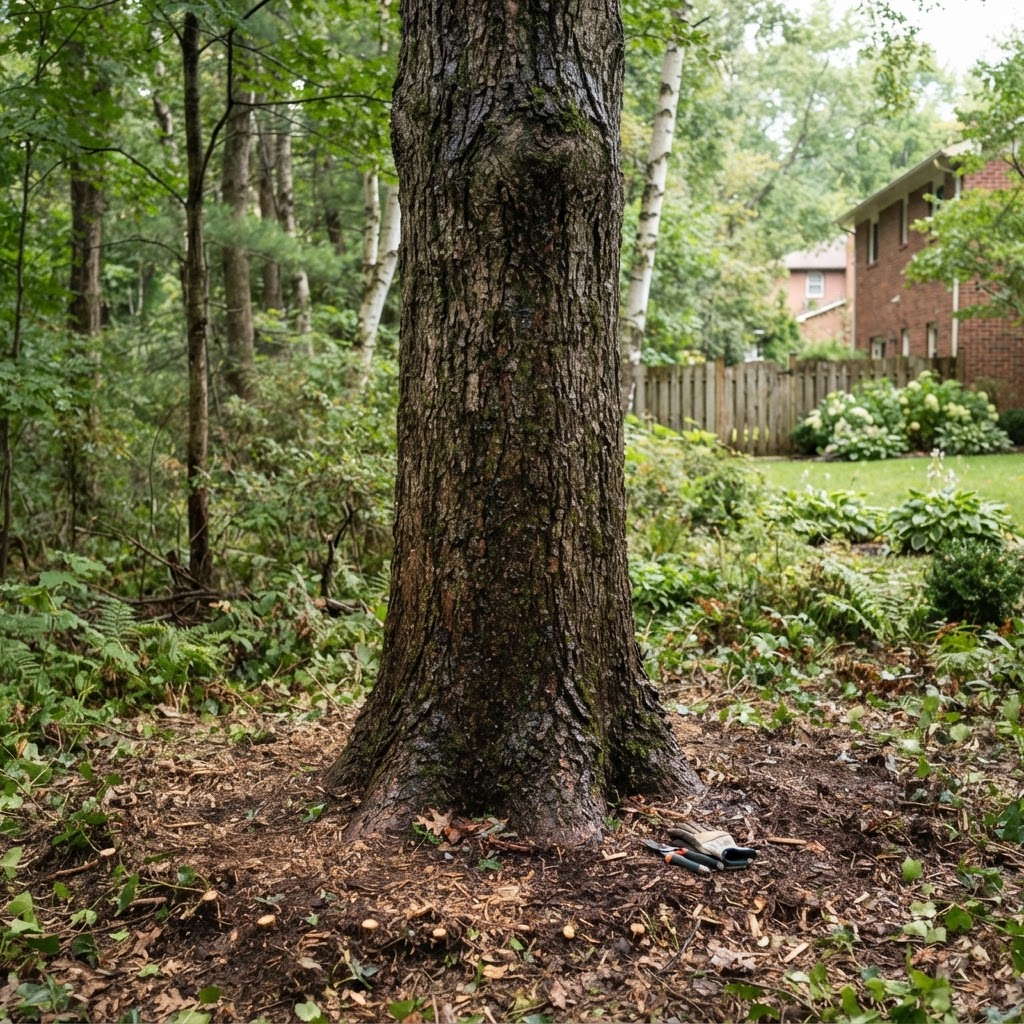
Invasive Plant, Vine & Overgrowth Removal
Manual removal of invasive plants, vines, brush and unwanted saplings — reclaim beds, fences and overgrown yard areas.
Vine Removal & Clearing
Reclaim overgrown areas from invasive vines and brush.
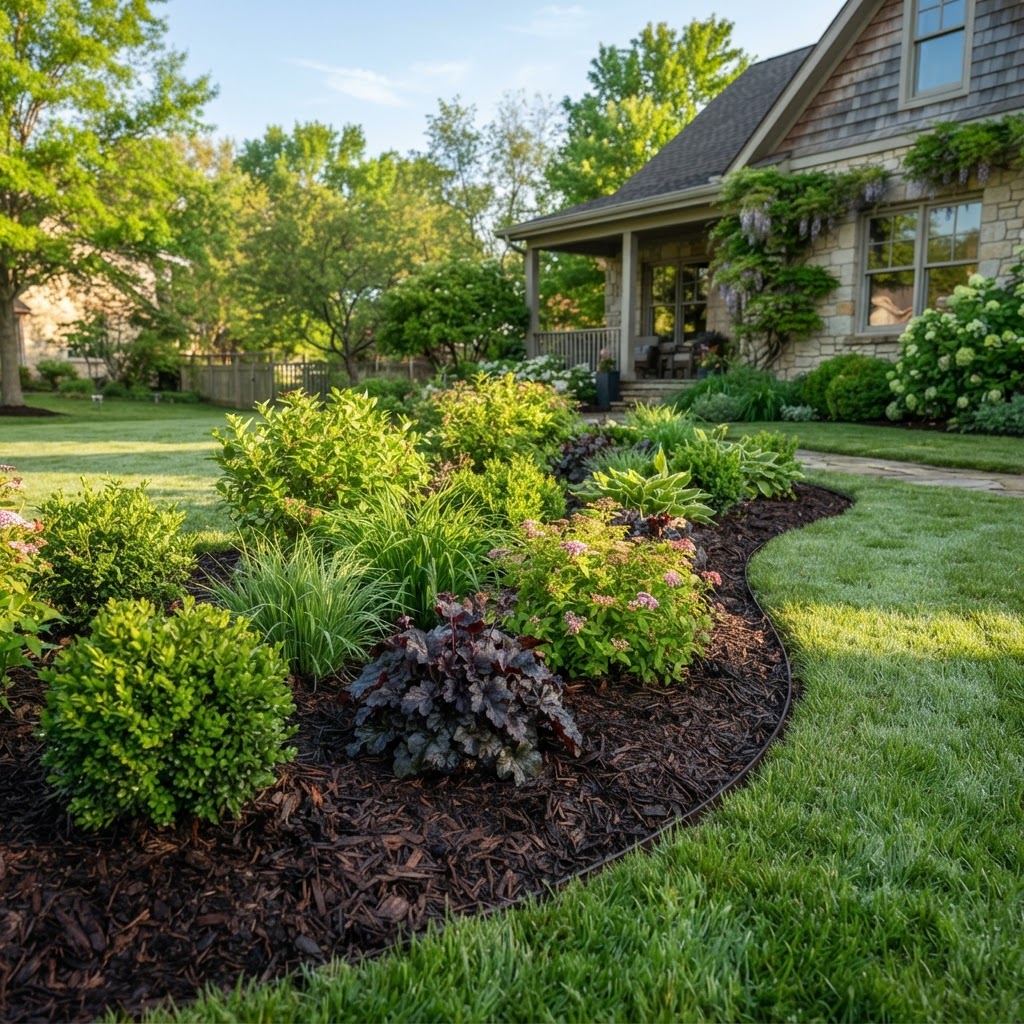
Mulch Installation
Fresh mulch for cleaner beds, fewer weeds, and instant curb appeal.
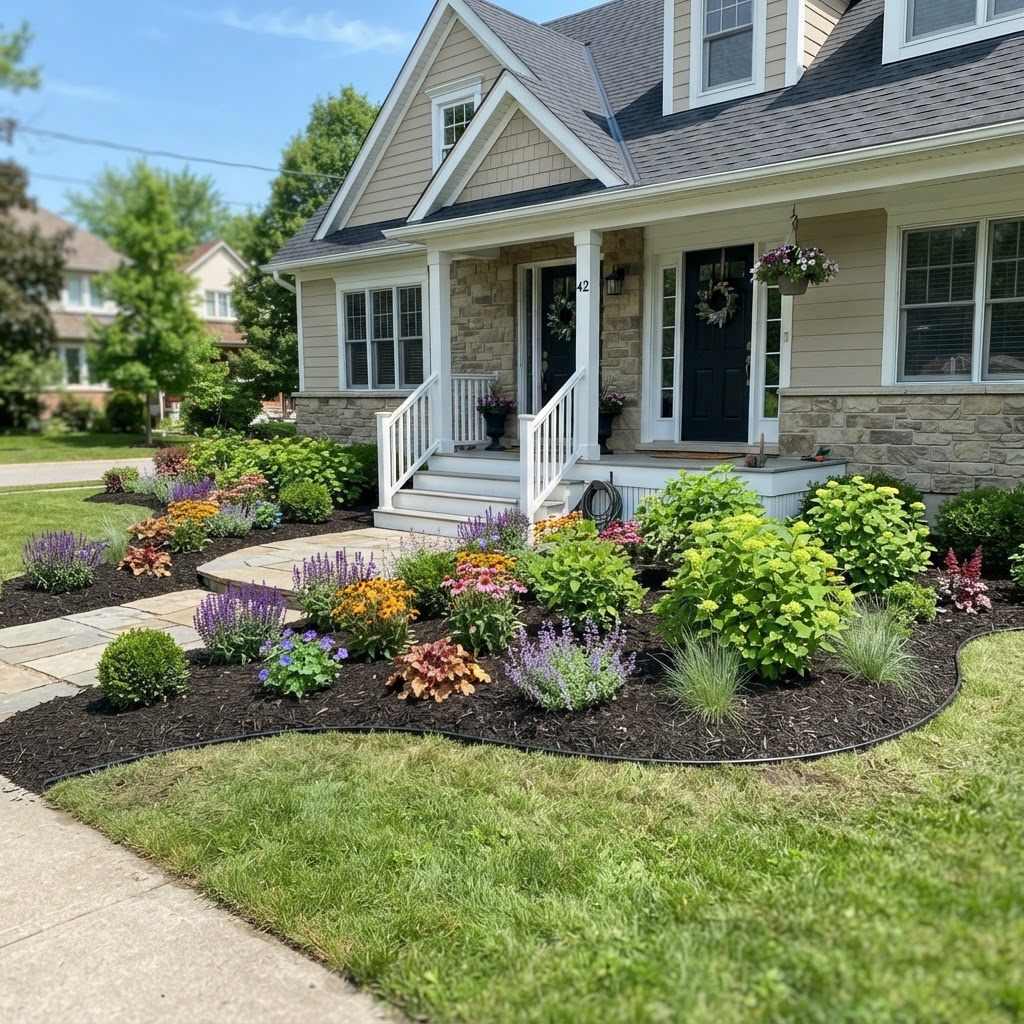
Plant Design & Installation
Thoughtful plant choices and professional installation for year-round color.
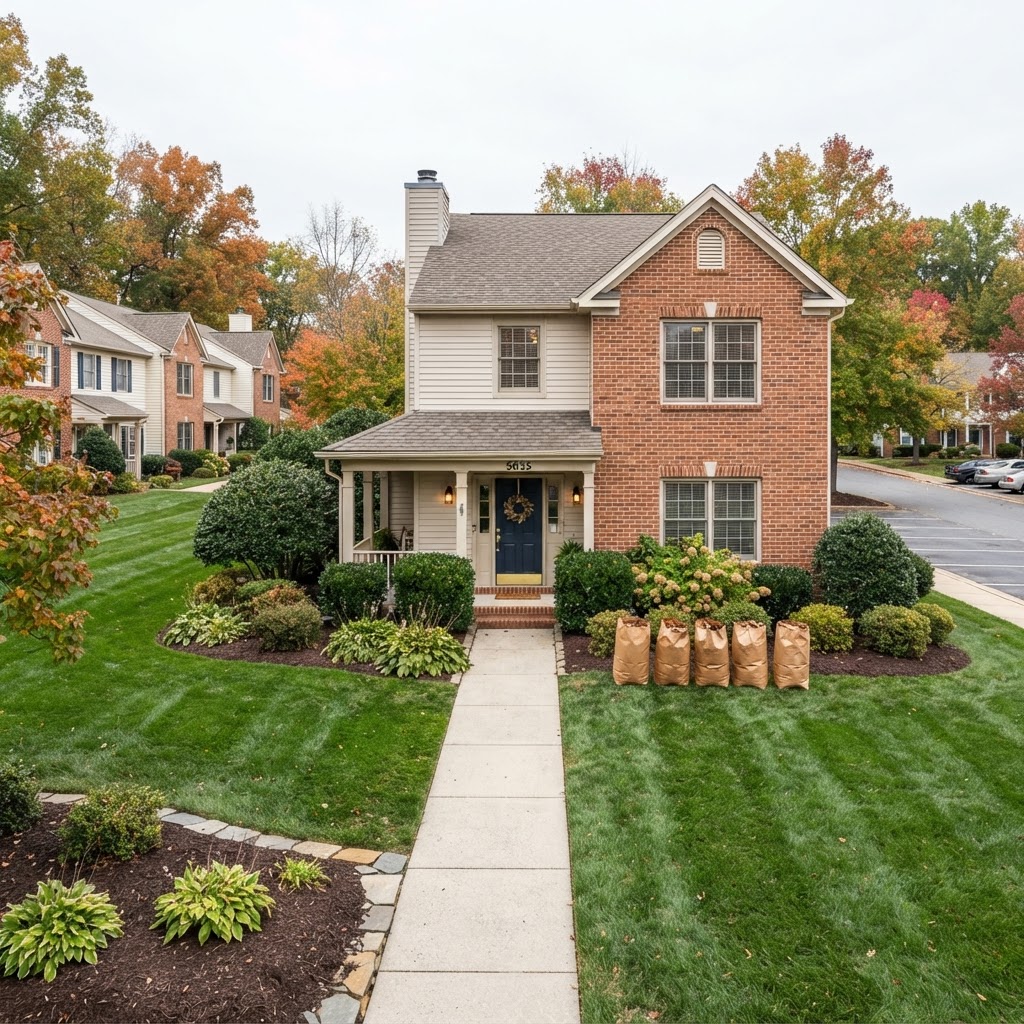
Property Clean Ups
Full yard resets—debris, leaves, branches, and overgrowth hauled away.
Areas We Provide English Ivy Removal
We offer english ivy removal across Northern Virginia. Find your city: