Poison Ivy Removal for Northern Virginia Properties
Safe, careful removal of poison ivy, poison oak, and poison sumac from your yard.
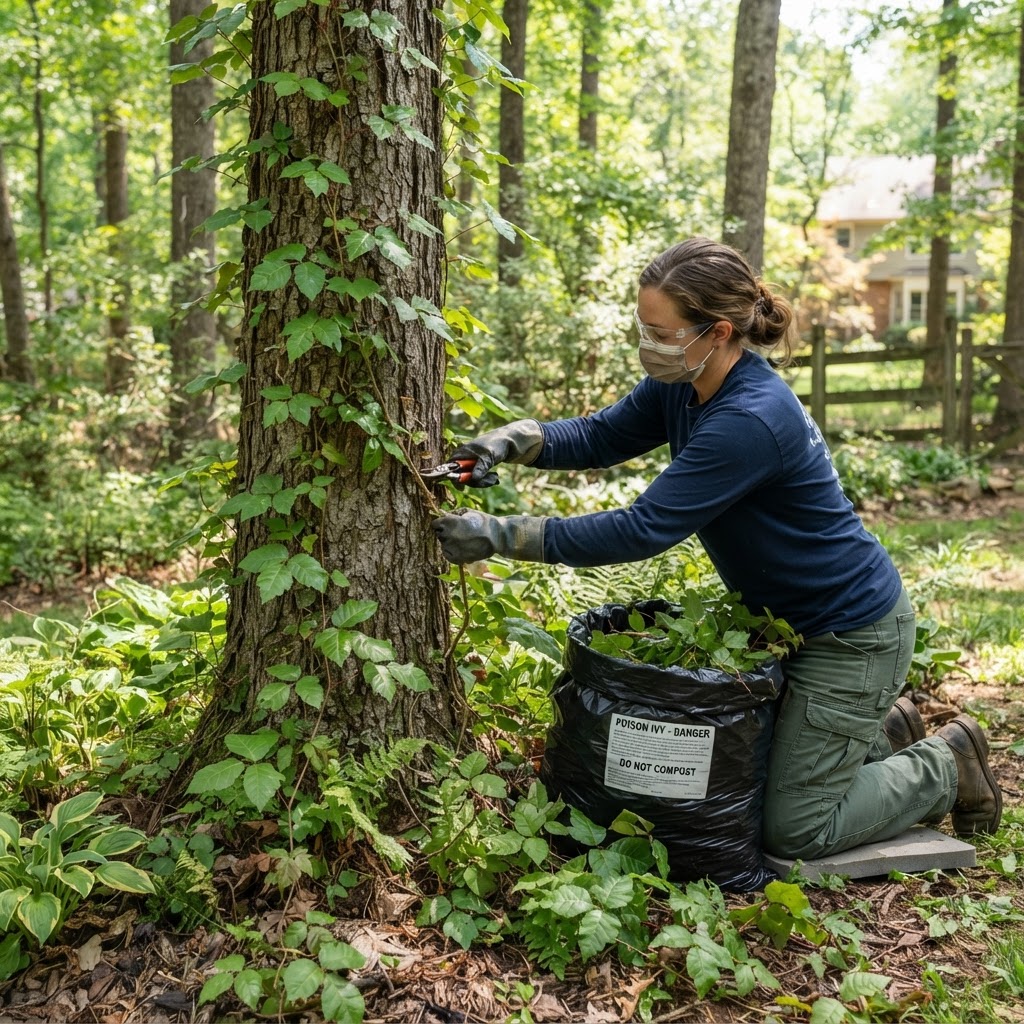
Poison ivy is one of the most common — and most uncomfortable — problems in Northern Virginia yards. We identify and carefully remove poison ivy, poison oak, and poison sumac, including the roots, and dispose of it safely so it doesn't spread. We also advise on preventing regrowth and protecting your family and pets.
What's Included
- Plant identification
- Protective, careful removal
- Root extraction
- Safe disposal
- Regrowth prevention tips
Why You Might Need Poison Ivy Removal
Common situations we see across Northern Virginia yards.
Poison ivy is growing in your beds, along your fence, or climbing your trees and you can't go near it.
You or a family member got a rash from contact with a plant in your yard.
You're not sure if a plant is poison ivy, poison oak, or poison sumac — and you don't want to touch it to find out.
How JYG Approaches Poison Ivy Removal
We identify and carefully remove poison ivy, poison oak, and poison sumac — including the roots — and dispose of them safely so the urushiol oil doesn't spread. Our team wears protective gear and we advise on preventing regrowth and protecting your family and pets. If you're not sure what the plant is, send us a photo and we'll confirm.
What to Expect
Free identification — send us a photo or we visit to confirm the plant.
We carefully remove the plant and root system wearing protective gear.
We dispose of the plant safely so the urushiol oil doesn't spread around your yard.
We advise on preventing regrowth and protecting your family and pets.
Northern Virginia Considerations
Poison ivy is one of the most common — and most uncomfortable — problems in Northern Virginia yards. It thrives in our wooded suburban lots, along fence lines, and at the base of trees. Poison sumac is also found in wet, swampy areas in NoVA. We know how to identify and safely remove all three, including the roots, so they don't come back.
Optional Add-Ons
Enhancements that pair well with this service.
Popular Local Service Areas
Our family lives in Nokesville and we prioritize homeowners nearby. If you're in one of these communities, we can often schedule your project within days.
Poison Ivy Identification: Poison Ivy vs. Virginia Creeper vs. English Ivy
Poison ivy is easy to mistake for other plants. The old rule 'leaves of three, let it be' is a good start, but not every three-leaf plant is poison ivy. Poison ivy has three pointed leaflets per stem, often with a reddish tint in spring and fall, and the middle leaflet has a noticeably longer stalk. Virginia creeper is the most common look-alike, but it has five leaflets, not three, and is harmless to most people. English ivy is another plant often confused with poison ivy, but it has a different leaf shape — rounded and lobed, not pointed — and it does not cause a rash. If you are not sure what you are looking at, do not touch it — send us a photo and we will confirm before anyone gets close.
How Poison Ivy Grows in Northern Virginia Yards
In Northern Virginia, poison ivy grows in three main forms. Ground-growing poison ivy spreads along the soil, often in beds, along fence lines, and at the base of trees — it can form dense mats that are hard to spot in taller ground cover. Climbing poison ivy vines attach to tree trunks, fences, and walls with aerial rootlets, reaching well up into the canopy; these mature vines can be thick and hairy-looking. Poison ivy can also grow mixed into shrubs and hedges, making it hard to see and risky to prune without careful inspection. Each form requires a different removal approach.
Where We Work Around Your Property
We remove poison ivy from all the places it turns up: along fences and property lines, climbing tree trunks and walls, around sheds and outbuildings, in garden beds and mulched areas, along fence lines shared with neighbors, and at the edges of wooded lots where it creeps into the maintained yard. We work carefully around desirable plants and structures, and we coordinate with neighbors when poison ivy is growing across a shared property line.
Cutting, Pulling, Clearing and Removal Options
Depending on the location and size of the infestation, we use a combination of cutting, pulling, and clearing. For ground-growing plants, we dig out the root system where possible to reduce regrowth. For climbing vines, we cut the vine at the base and a few feet up, then carefully remove the lower section; the upper vine can be left to die and dry out on the tree, which avoids damaging the bark by pulling. For poison ivy mixed into shrubs, we carefully extract it without damaging the desirable plant. We do not use blanket herbicide as a first choice — we prefer physical removal and targeted treatment only when needed.
Why Dead Poison Ivy Is Still Dangerous — and Why You Should Never Burn It
Dead poison ivy is still dangerous. The urushiol oil that causes the rash remains active on dead plant material, roots, and vines for years — even after the plant is dead and dried up. Never handle dead poison ivy without protection. And never burn poison ivy — the smoke carries urushiol oil into the lungs and can cause a severe, life-threatening reaction. We dispose of all poison ivy plant material by bagging and landfilling, never by burning.
How We Contain and Remove Poison Ivy Plant Material
We bag and remove all poison ivy plant material from your property — we do not leave it on-site or compost it. Our team wears protective gear and cleans tools after removal to prevent cross-contamination. We also advise you on cleaning any tools, clothing, or pet fur that may have come into contact with the plant.
Follow-Up Treatment and Monitoring
After the initial removal, we assess whether follow-up treatment or monitoring is recommended. Established poison ivy root systems can regrow, and seeds can germinate in the cleared area. For stubborn patches, a follow-up visit later in the season may be the most effective approach. We will let you know what to watch for and when to call us back.
Please note: Complete, permanent eradication cannot be guaranteed after a single visit. Poison ivy has established root systems that can regrow, and seeds can germinate from nearby plants or be carried in by birds. We remove what is visible and accessible, and we advise on a monitoring plan — but follow-up treatment may be needed for heavily established infestations.
Poison Ivy Removal FAQ
Common questions about poison ivy removal in Northern Virginia.
Related Services
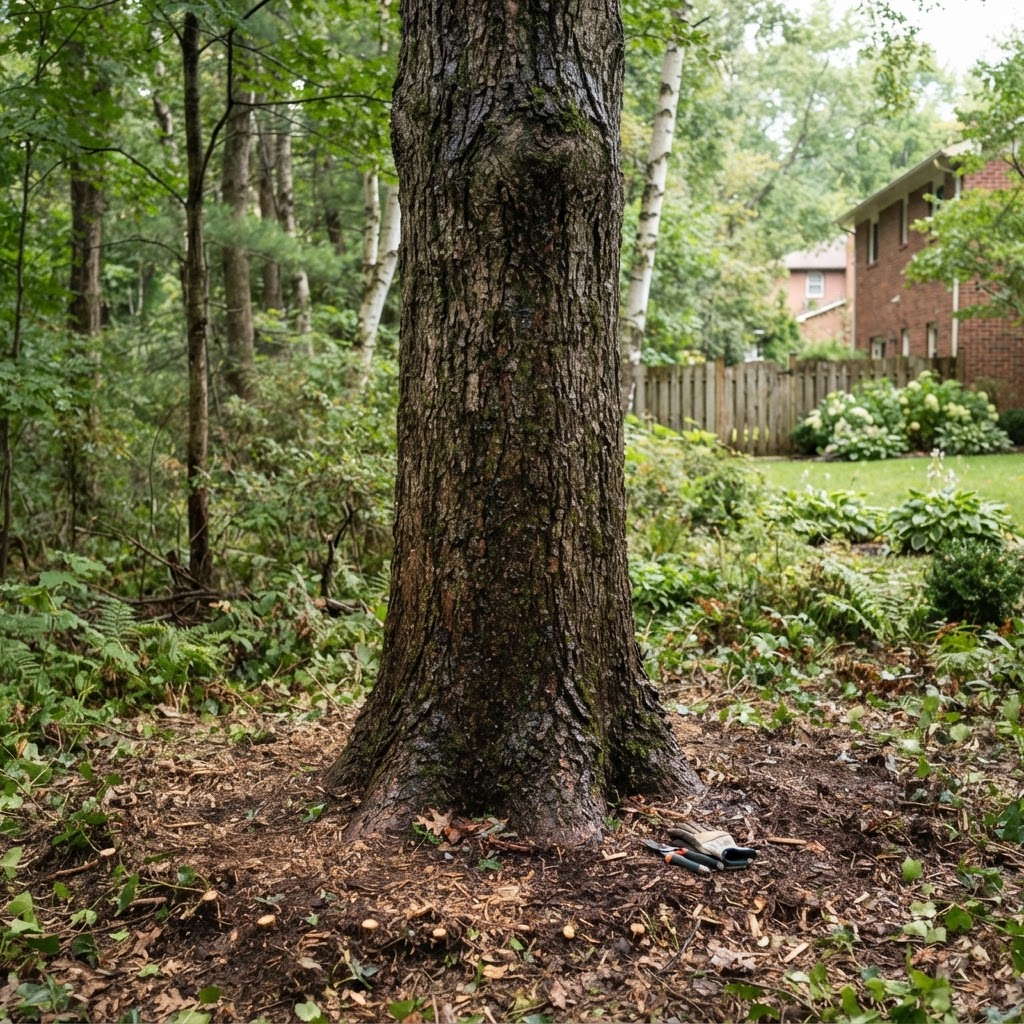
Invasive Plant, Vine & Overgrowth Removal
Manual removal of invasive plants, vines, brush and unwanted saplings — reclaim beds, fences and overgrown yard areas.
Vine Removal & Clearing
Reclaim overgrown areas from invasive vines and brush.
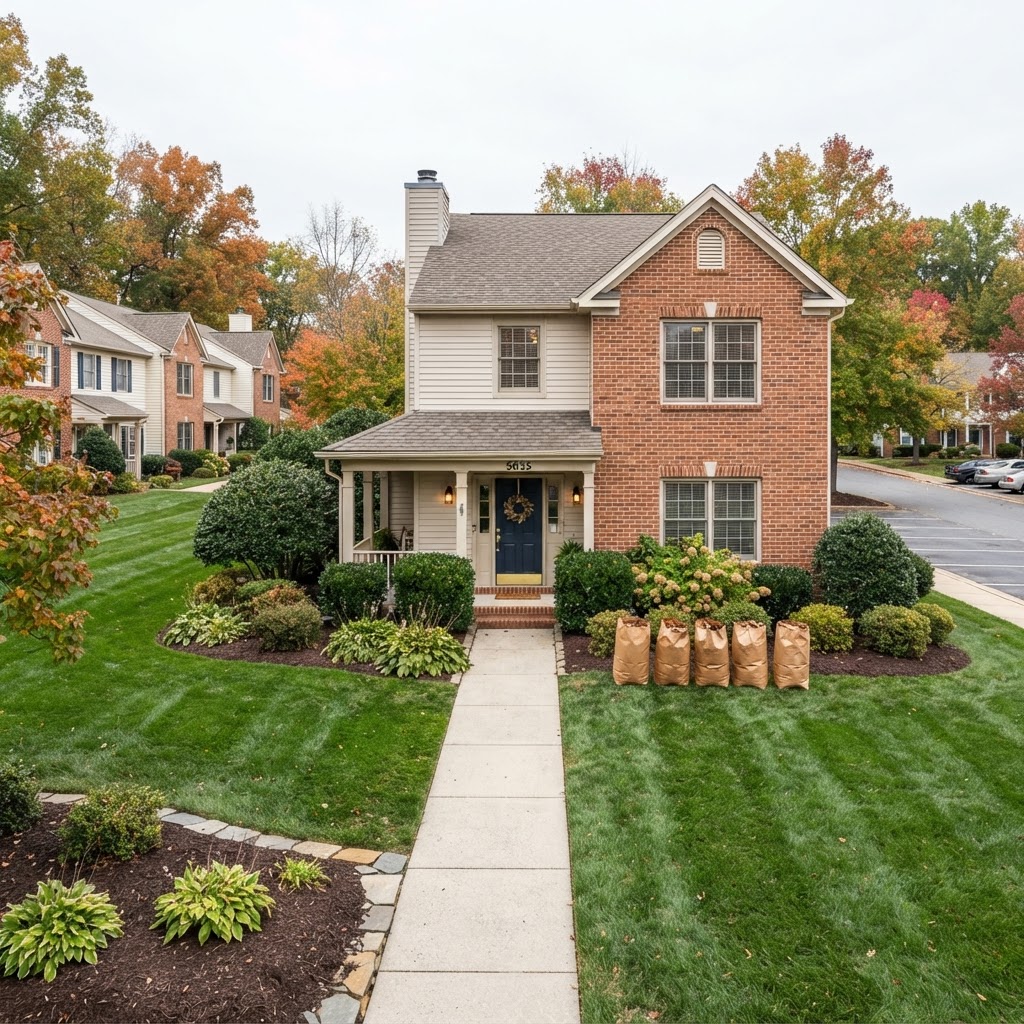
Property Clean Ups
Full yard resets—debris, leaves, branches, and overgrowth hauled away.
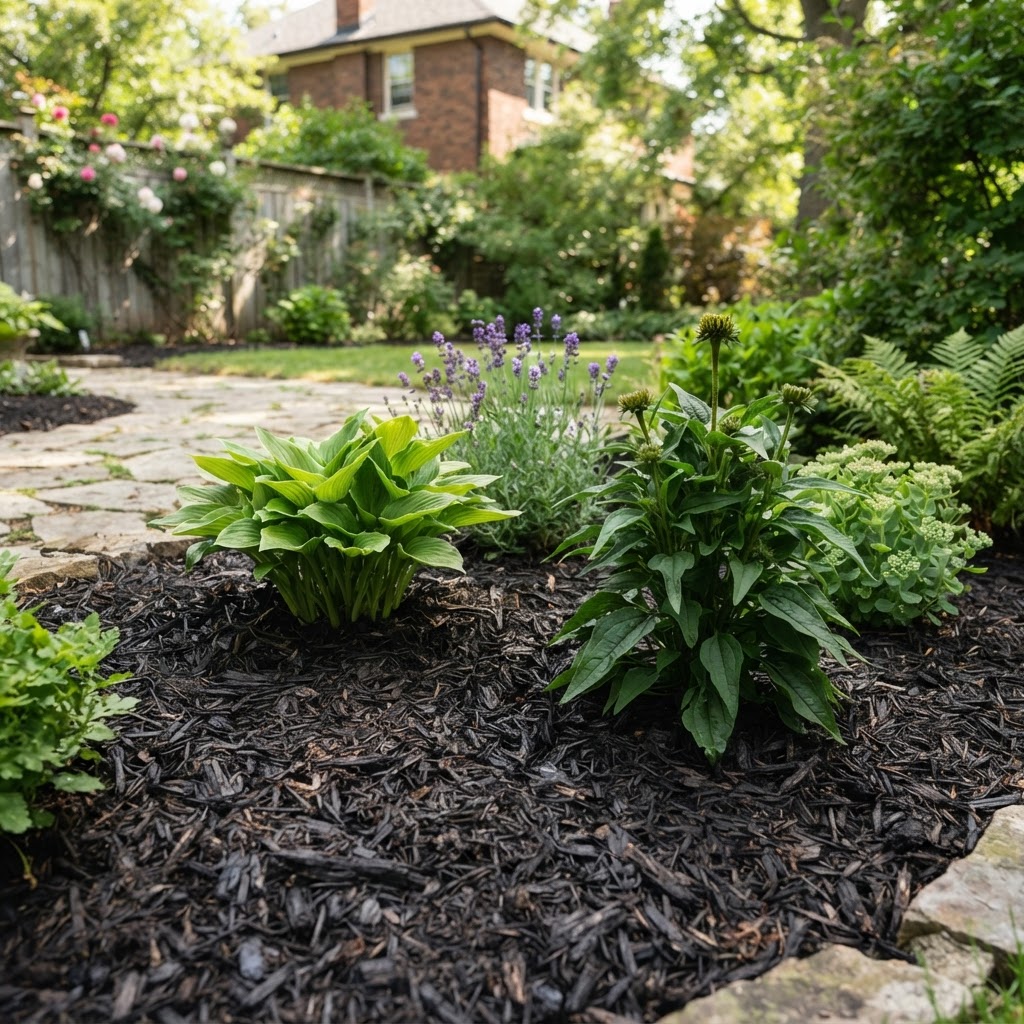
Bed Weeding
Keep beds clean and healthy with regular, thorough weeding.
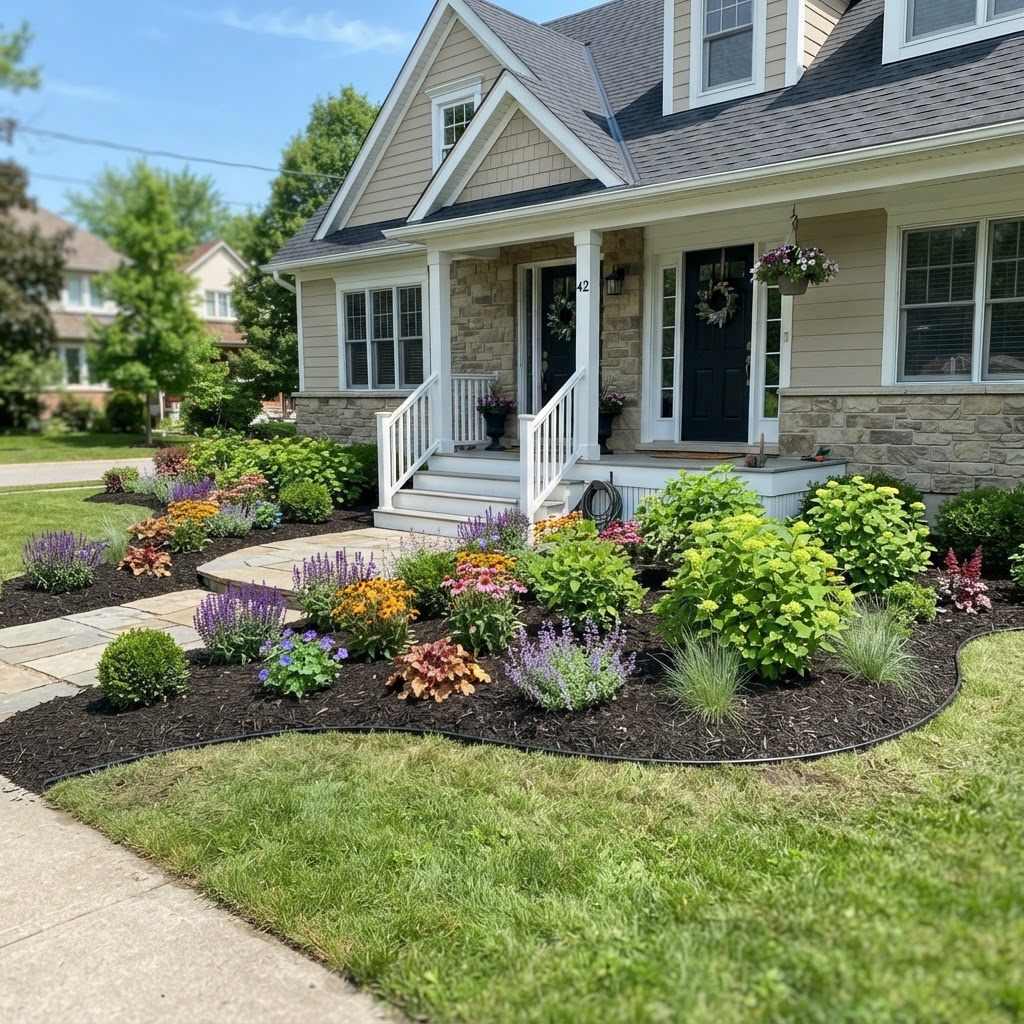
Plant Design & Installation
Thoughtful plant choices and professional installation for year-round color.
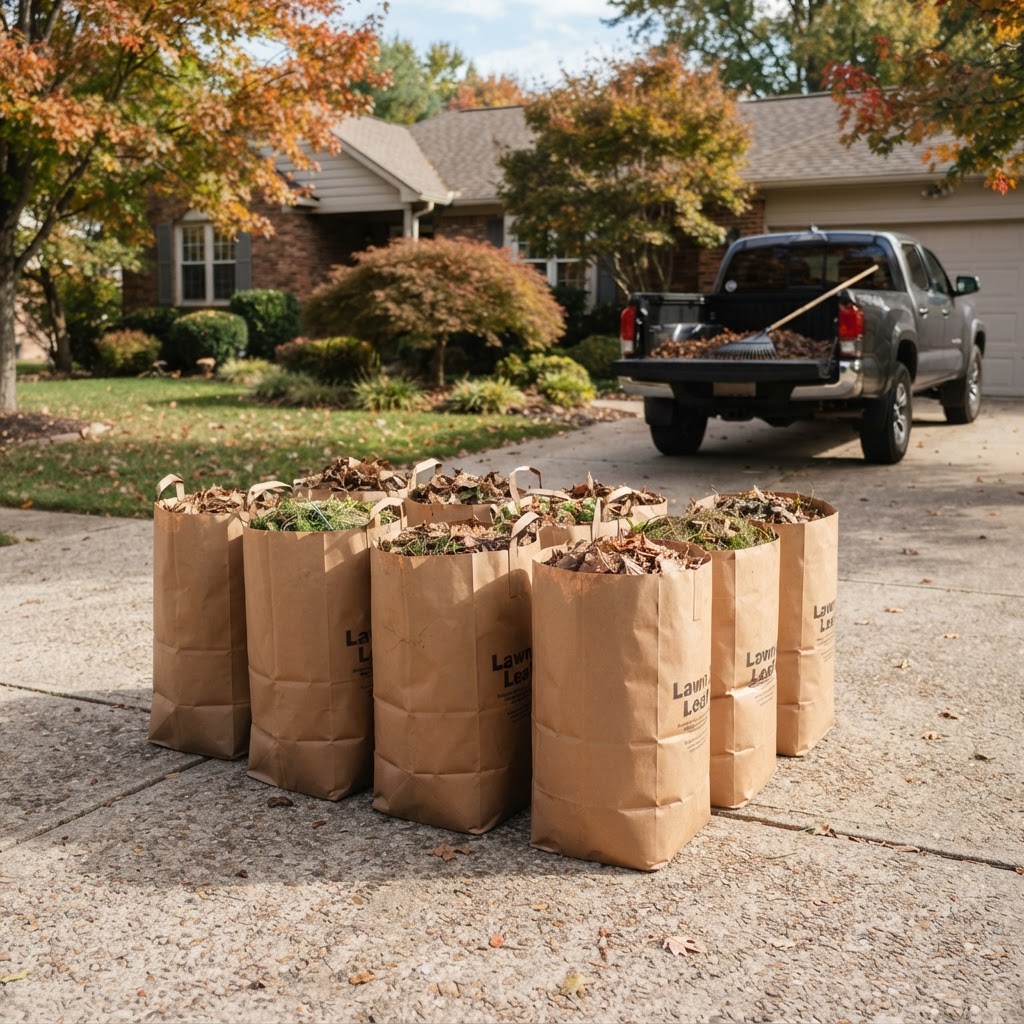
Yard Waste Removal
You do the yard work. JYG handles the haul-away — paper-bagged or loose yard waste loaded and hauled from your Northern Virginia property.
Areas We Serve for Poison Ivy Removal
We provide poison ivy removal across Northern Virginia. Find your community:
Alexandria
Compact lots and mature landscaping in Alexandria mean poison ivy often grows along fence lines and shared property boundaries — we work carefully in tight spaces.
Warrenton
Warrenton's wooded property edges and rural lots are prime habitat for poison ivy along tree lines and fence rows.
Fairfax
Established Fairfax neighborhoods with mature trees and wooded edges often have poison ivy creeping into beds and climbing trunks.
Gainesville
A primary service community — we know Gainesville's townhome communities and wooded lots and where poison ivy likes to grow.
Haymarket
Haymarket's mix of newer communities and rural edges means poison ivy along fence lines and at the woodland border is common.
Bristow
Bristow's townhome and single-family neighborhoods back up to wooded common areas where poison ivy thrives.
Nokesville
Nokesville's larger rural lots often have poison ivy along field edges, fence rows, and at the base of trees.
Manassas
In Manassas, tight lots and mature trees mean poison ivy in beds, on fences, and climbing trunks is a common call.
Centreville
Centreville's dense subdivisions back up to wooded buffers where poison ivy creeps into beds and along fences.
Chantilly
Chantilly's townhome communities and wooded edges are prime spots for poison ivy along shared fence lines and in beds.
Reston
Reston's wooded lots and natural areas mean poison ivy in the landscape is common — we remove it carefully while preserving the natural character.
Burke
Burke's established neighborhoods with mature trees and wooded common areas often have poison ivy at the edges and climbing trunks.
Springfield
Springfield's mix of established and wooded lots means poison ivy along fence lines and in overgrown beds is a frequent request.
Fairfax Station
Fairfax Station's large wooded lots are ideal habitat for poison ivy — along trails, fence lines, and at the base of mature trees.
Related specialty services: invasive vine removal, English ivy removal, overgrown yard cleanup.